IDF logo
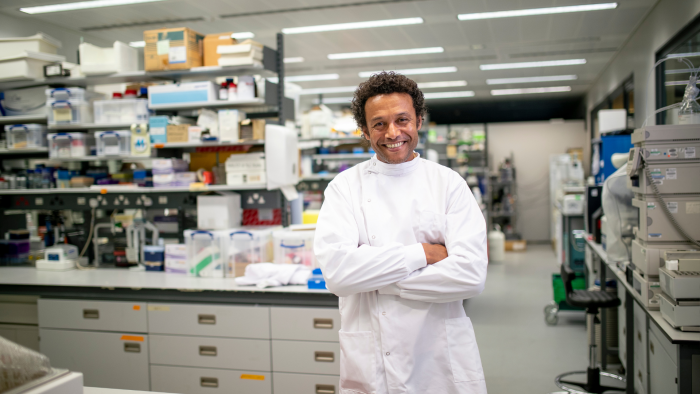
Researcher in his lab.

Research Grant Program

Providing research grants to support clinicians and scientists focused on primary immunodeficiency (PI).

Scope and eligibility

The Immune Deficiency Foundation's Research Grant Program supports patient-centered research focused on improving the treatment, health, disease management, or diagnosis of people with primary immunodeficiency (PI), as well as research that contributes to the broader body of knowledge on PI.

  • Awards range from $25,000-50,000. In addition, the Michael Blaese Research Grant Award is bestowed on the highest-scored application each cycle.
  • Open to U.S-based academic researchers in medicine and science conducting non-commercial research.
    • Investigators (M.D., D.O., Ph.D., RN) with an interest, or currently pursuing a career, in primary immunodeficiency and research are particularly encouraged to apply.
    • Note that medical students, graduate students, residents, fellows, and other professional school students can apply, as long as they have the support of an appropriate mentor. Please ensure that you provide a letter of support from the academic mentor, as well as their NIH biosketch, clearly demonstrating their support for the research project, mentorship, and supervision.
    • Currently unavailable for individuals employed by federal government agencies or departments.
  • One-year term.
  • Because this program focuses on patient-oriented research on primary immunodeficiencies, no proposals using animal models will be funded.
  • No funds are provided for institutional overhead.
  • Only one submission per applicant.

Application deadline: September 14, 2026, at 11:59 p.m. ET.

Please download and complete the PDF application, then submit the completed application electronically using the form below. 

Download PDF application

Research Grant Application Form

Fill out the form below to apply for a 2026 Research Grant.

Please upload your completed PDF application, including your biosketches and letters of support/recommendation.
 
Maximum 3 files.
25 MB limit.
Allowed types: pdf.

Evaluation process

The Research Committee, made up of recognized immunologists and past grant awardees, reviews and scores research proposals through a peer review process based on the system used by the National Institutes of Health (NIH). The committee recommends funding for the proposals with the highest scores, ensuring an unbiased and independent selection process based on scientific merit.

Most recent awardees

2025’s four Research Grant Program awardees will use their funding to better understand some of the rarest primary immunodeficiencies (PIs) and develop diagnostics and treatments. Grantees are pictured from left to right, Drs. Eric Allenspach, Caroline Kuo, Ashley Lee, and Patrick O'Connell.

2025 Research Grant Program awardees; from left to right, Drs. Eric Allenspach, Caroline Kuo, Ashley Lee, and Patrick O'Connell.

Previous awardees

Starting in 2022, the top-ranked grant in each cycle has been awarded the Michael Blaese Research Grant Award, named in honor of the foundation's long-time medical advisor and noted PI researcher, Dr. Michael Blaese.

Blaese awardee: Dr. Eric Allenspach, Seattle Children’s Hospital.

Dr. Caroline Kuo, University of California, Los Angeles; Dr. Ashley Lee, Columbia University Irving Medical Center; Dr. Patrick O’Connell, Mount Sinai Kravis Children’s Hospital.

Read about the 2025 winning grants.

Blaese awardee: Dr. Emily Harris, Dana-Farber/Boston Children’s Cancer and Blood Disorders Center.

Dr. David Nguyen, University of California, San Francisco; Dr. Alexandra Martinson, Children's National Hospital; Dr. Lauren Meyer, Seattle Children’s Hospital.

Read about the 2024 winning grants.

Blaese awardee: Dr. Donald Kohn, University of California, Los Angeles.

Dr. Benjamin Solomon, Stanford University; Dr. Xiao Peng, Johns Hopkins University; Dr. Brynn O’Laughlin, Children’s National Hospital; Dr. Junghee Jenny Shin, Yale University.

Read about the 2023 winning grants.

Blaese awardee: Dr. Joud Hajjar, Baylor College of Medicine.

Dr. Brenna LaBere, Boston Children’s Hospital; Dr. Beth Thielen, University of Minnesota; Dr. Artemio Jongco, Feinstein Institutes of Medical Research.

Read about the 2022 winning grants.

Dr. Alice Chau, Seattle Children’s Institute; Dr. Pietro Genovese, Dana Farber Cancer Institute; Dr. Sarah Henrickson, Children's Hospital of Philadelphia; Dr. Michelle Hermiston, University of California San Francisco; Dr. Paul Maglione, Boston University School of Medicine; Dr. Bethany Percha, Icahn School of Medicine at Mount Sinai; Dr. Qian Zhang, The Rockefeller University.

View 2020 awarded grants.

Dr. Shanmuganathan Chandrakasan, Emory University; Dr. Stacey Lynn Clardy, University of Utah; Dr. Rui Yang, The Rockefeller University; Dr. Carolyn Baloh, Duke University.

View 2018 and 2019 awarded grants.

Dr. Lori Broderick, University of California, San Diego; Dr. Megan Cooper, St. Louis Children’s Hospital Foundation; Dr. Attila Kumanovics, University of Utah; Dr. Carrie L. Lucas, Yale University.

View 2018 and 2019 awarded grants.

Dr. Sara Barmettler, Massachusetts General Hospital; Dr. Nilesh Chitnis, Children's Hospital of Philadelphia; Dr. Joud Hajjar, Baylor School of Medicine; Dr. Artemio Jongco, Feinstein Institute for Medical Research; Dr. Sergio Rosenzweig, National Institutes of Health.

Dr. Sonia Sharma, La Jolla Institute for Allergy & Immunology.

View 2016 and 2017 awarded grants.

White paper challenge

In 2022, the Immune Deficiency Foundation sponsored a White Paper Challenge to seek out new ideas and address relevant topics in the PI community. We invited submissions from all individuals, institutions, schools, and researchers with exciting ideas about expanding awareness in communities of color, improving access to clinical trials, and shortening the time from diagnosis to treatment.

Read about the winners

Doctor speaking with girl and her parent.